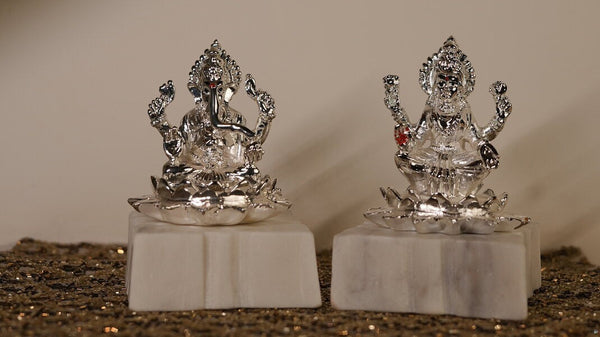
Every Amayaah artifact carries the fingerprint of a single city: Udaipur. Known as the City of Lakes, Udaipur has been one of Rajasthan’s most important centres of handicraft for centuries — home to families who have shaped silver, brass and marble across generations. When you hold an Amayaah piece, you are holding the living memory of that heritage.
Udaipur: a city built on craft
Long before it became a destination for travellers, Udaipur was a city of makers. Its palaces, temples and havelis were adorned by artisans whose skills passed from parent to child and workshop to workshop. That ecosystem of craft still thrives in the lanes of the old city, where the sound of hammer on metal and chisel on marble remains a part of daily life.
We work with these same artisan families. Choosing Udaipur is not a matter of convenience — it is a decision to keep a centuries-old tradition of Indian craftsmanship alive, and to give it the platform of a modern luxury brand.
From molten metal to finished form
A single silver-coated idol passes through many hands before it is complete. Each stage is deliberate, and much of it is still done exactly as it was a hundred years ago.
Casting the form
The process begins at the forge, where metal is heated until it flows and is poured into hand-carved moulds. This is where the silhouette of a Ganesha, an elephant or a Kamdhenu first takes shape.
Chasing and detailing
Once cast, the surface is refined by hand. Artisans use fine tools — many worn smooth with years of use — to chase intricate detailing into the metal: the folds of a garment, the petals of a lotus, the expression on a deity’s face. Because it is done by hand, no two pieces are ever truly identical.
The silver finish
Finally, each artifact is finished with a lustrous silver coating over a durable core. This gives the luminous look and reassuring weight of silver while keeping the piece suited to everyday display — and accessible across a range of budgets.
Marble and the Rajasthani tradition
Rajasthan is as celebrated for its marble as for its metalwork. The state’s quarries have supplied stone for some of India’s most famous monuments, and its carvers are among the finest in the world. As Amayaah grows, our vision looks ahead to marble and brass artifacts that draw on this same regional mastery — sacred forms carved in stone, made to last for generations.
Why handcrafted still matters
In an age of mass production, a handmade object is a quiet act of care. It carries small, human imperfections that a machine would never allow — and it is precisely those imperfections that give it soul. A handcrafted piece is slower to make, harder to replicate, and impossible to truly copy. It is made to be kept, not replaced.
Heritage, refined for the modern home
What makes Amayaah contemporary is not a departure from this heritage but a devotion to it. We pair centuries-old technique with a restrained, considered aesthetic, so that a sacred object sits as naturally in a modern apartment as in an ancestral home. The result is an artifact that honours where it comes from while belonging, effortlessly, to the present.
Explore the pieces born from this tradition in our Spiritual collection, discover the Vaastu artifacts designed for placement, or read more about the house of Amayaah.