No deity is bought as often, or placed as inconsistently, as Ganesha. He is the first idol in most Indian homes and usually the first one bought for a new house, a new business, or a wedding gift — which means most people are choosing one under time pressure, without knowing the handful of details that actually change how the idol works. Here is everything worth knowing before you buy.
Why Ganesha comes first, always
Before any new beginning — a home, a marriage, a business, a journey — Ganesha is the deity invoked first. As Vighnaharta, the remover of obstacles, his presence is believed to clear the path ahead; as Buddhi-Pradaayaka, the lord of wisdom and intellect, he blesses every decision made in his presence. It's why he's almost always the first idol purchased for a new address, and why so many other deities — Lakshmi included — are traditionally placed only after Ganesha is already home.
Does the trunk direction actually matter?
This is the question we're asked more than any other, and the honest answer is: it matters more for the home than for the workplace. For a household Ganesha, tradition favours a trunk that curves to the left, which is associated with peace, harmony and a gentler domestic energy. The right-curving trunk (Siddhi Vinayak form) is considered more powerful but also more demanding in its ritual care, and is traditionally reserved for temples rather than homes. If you're buying for a family home, a left-curving trunk is the safer, traditionally correct choice.
Where to place a Ganesha idol
- Facing the main entrance — the single most common and most recommended placement, so that Ganesha's blessing is the first thing that greets anyone entering the home
- The North-East (Ishanya) corner — Vastu's most sacred zone, ideal if the home's layout allows for it
- Eye level or on a raised, clean surface — never on the floor, and never in a bathroom or directly facing a bed
- Never under a staircase — a placement many first-time buyers make by accident, considered disrespectful in Vastu terms
Idol or wall panel — which should you buy?
This comes down to where the blessing needs to sit rather than preference alone:
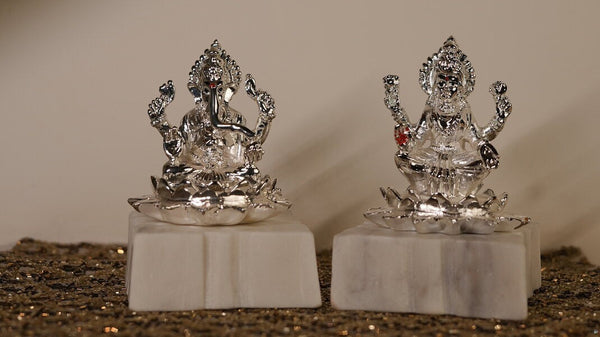
- Choose the Silver Sovereign Ganesha (from ₹10,500) for a console table, puja shelf or entrance surface — a freestanding idol you can angle precisely toward the door
- Choose the Ganesha Wall Panel (₹7,500) when there's no surface to work with — directly above or beside the door, which is in fact one of the oldest Vastu practices there is, since it sanctifies the doorway itself rather than a table beside it
One detail worth knowing if you choose the wall panel: if you place a Ganesha facing outward above an external door, tradition suggests keeping a second one inside facing in — so that his back is never turned to the home itself.
Choosing a size
Larger idols (9 inches and above) suit a dedicated puja room or a prominent entrance console, where the piece is meant to be a visual anchor. Smaller idols (around 6 inches) work well on shared shelves, office desks, or as a first idol for a young couple's first home — substantial enough to feel significant, without overwhelming a smaller space.
When to gift a Ganesha idol
Because his blessing is specifically about beginnings, Ganesha is the most versatile gifting idol in the entire Vastu and devotional category:
- Housewarmings (griha pravesh) — by far the most common occasion
- New business openings and office inaugurations
- Weddings, where he blesses the beginning of a shared household
- Ganesh Chaturthi and Diwali, the two festivals most associated with his worship
Caring for a silver Ganesha
Silver-coated idols hold their lustre best when kept away from direct incense smoke residue and wiped with a soft, dry cloth rather than any chemical polish. A light cleaning during each Diwali or before Ganesh Chaturthi is usually enough to keep the finish luminous for years.
Explore the full Ganesha Collection, or browse The Divine Deities for the idols traditionally placed alongside him once the home's first blessing is in place.