Search "vastu items for home" and you'll get a hundred listicles and almost no guidance on the part that actually matters: where each item goes, and why. Vastu Shastra treats direction as inseparable from meaning — the same elephant that strengthens a home in the North can do very little for it sitting in the wrong corner. This is the placement guide we wish existed when we started sourcing pieces for Amayaah: organised by direction, not just by object.
North — the direction of Kubera, lord of wealth
The North is Vastu's primary wealth zone, governed by Kubera. Anything meant to protect or grow fortune belongs here.
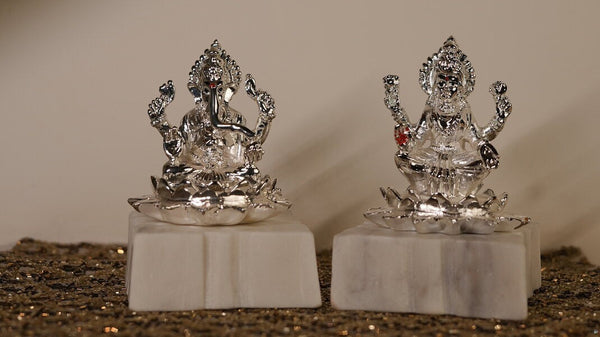
- Silver Lakshmi Murti — North is one of her two correct directions, always seated, never standing
- Owl of Prosperity — Lakshmi's own vahana, ideal near a study or workspace for wealth guided by wisdom
- Vastu Tortoise — the North is literally the tortoise's own celestial quarter in Vastu texts; place near water if possible
- Flowing Waters painting — water is wealth's own element, and the current should always flow into the room
North-East (Ishanya) — the most sacred corner of any home
If a home has one Vastu-critical corner, it's this one. Spiritual and devotional pieces belong here above all else.
- Silver Sovereign Ganesha — the North-East is one of his two recommended placements
- Sacred Lotus — the traditional occupant of the spiritual corner
- Kamdhenu Cow & Calf — especially auspicious near the kitchen, which often sits close to this zone
- Sacred Silver Shankh — the most auspicious corner for the divine conch, resting tip-up on a clean stand
East — growth, new understanding, the rising sun
The East governs fresh starts and forward motion — the direction for anything meant to keep opportunity arriving.
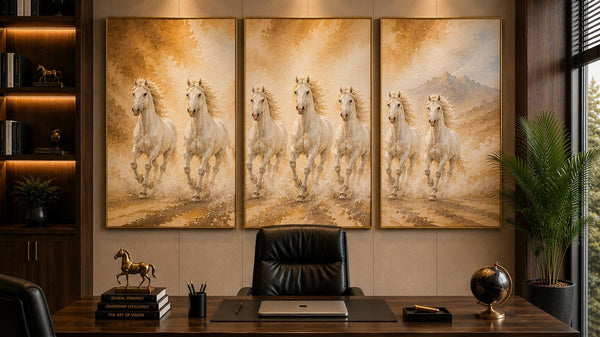
- Seven Running Horses — horses running into the room, never toward a door or window
- The Bodhi Tree — the direction of the rising sun suits its theme of awakening and new understanding
- Ram Darbar Ensemble — East wall, facing West, so the family faces East in prayer
South — fame, recognition, protection
The South carries dual significance in Vastu: it's both the zone of public recognition and, through Hanuman, the direction of protection.
- Hanuman Idol — South-facing is considered the definitive placement, guarding the home from all harm; never in a bedroom
- Victory Horse — South, or an office desk, facing into the room
- Golden Phoenix Rising — South wall, the fire and fame sector, phoenix rising upward
South-West — relationships and partnership
The one direction most home-Vastu guides skip, and the one that matters most for couples.
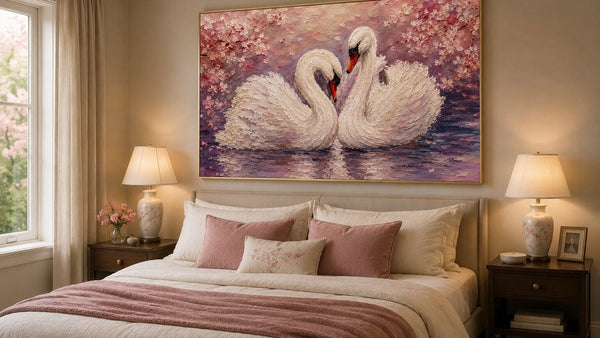
- Pair of Swans — the South-West corner of the bedroom or living room is their correct placement, always kept as a pair
South-East — the secondary wealth corner
- Nine Koi Prosperity — fish swimming inward, toward the heart of the home, in this or the North wall
The main entrance — every direction's shared threshold
Whatever direction a home actually faces, the entrance itself follows its own rule: it is where every guest and every energy first crosses in, and Vastu treats it almost as a direction of its own.
- Ganesha Wall Panel — above or beside the main door
- Elephant of Fortune — facing the entrance, trunk raised, ideally as a pair
Three mistakes we see most often
- Obscuring part of a symbol. A partially hidden horse, a swan tucked behind a lamp — Vastu treats these compositions as needing to be fully visible to work.
- Placing water-themed art in the bedroom. Flowing water and koi paintings are considered too restless for a room meant for sleep, however well they suit the North or South-East elsewhere.
- Buying by object instead of by direction. The most common mistake of all — choosing a piece because it's beautiful, then placing it wherever there's space, rather than starting from the room's actual direction.
Explore the full Vastu Atelier, organised across every direction covered here, or browse Sacred Fauna for the animal symbols — elephant, tortoise, owl, horse, eagle and swan — that anchor most of a well-placed Vastu home.